
Blog

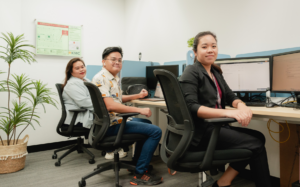
Team members reviewing documents together during a meeting.
Blog

How ANCLA Plumbing Stopped Administrative Backlogs From Slowing Field Operations

Ancla Plumbing was facing growing administrative backlogs that were beginning to impact field productivity and service delivery. By partnering with The Virtual Hub, they streamlined key administrative processes, improved operational efficiency, and freed their field teams to focus on customer work instead of paperwork. The result was a more organized, scalable operation that supported business growth without sacrificing service quality.

Woman working at a desktop computer in a modern office.
Blog

Definitive Task Glossary: What to Delegate So You Can Focus on Business Growth

Learn what tasks to delegate so you can reclaim your time, reduce operational overwhelm, and focus on scaling your business strategically. This definitive task glossary breaks down common responsibilities you can confidently hand off to a Virtual Assistant — from admin and customer support to marketing and operations — helping you build a more efficient and growth-driven business.

Team laughing together in a bright office during a casual meeting
Blog

How Austral Herbs Cut Response Delays and Cleared Admin Backlogs with a Support Team

Austral Herbs faced growing operational strain as rising demand slowed response times, delayed approvals, and created admin backlogs. Instead of expanding their internal team, they introduced a dedicated support layer through trained virtual assistants, allowing critical tasks to be redistributed and executed consistently. This shift enabled faster customer responses, streamlined workflows, and freed up internal capacity to focus on higher-value, growth-driven work.

Woman smiling while holding a notebook in an office
Blog

Delegation for Type A Personalities: Scaling Performance Without Burning Out

High-performing, Type A leaders often build success through speed, control, and deep involvement in execution. While this drives early wins, it becomes a bottleneck as the business grows. Research shows burnout is widespread among leaders managing increasing workloads. The core issue is not capability, but how work is structured and distributed. Delegation, when built around clearly defined tasks and outcomes, allows leaders to expand capacity without sacrificing quality. By shifting from doing everything themselves to building systems and empowering teams, leaders create scalable operations that reduce stress, improve output, and enable long-term growth.

Person working at a desk with dual monitors in a modern office, focused on computer tasks
Blog

Functional Organizational Design in the AI Era: Who Should Be Doing the Work?

Despite widespread AI adoption, many teams feel busier than ever because new layers of work are created rather than eliminated. The problem is not technology—it’s how work is structured. High-performing organizations are shifting from role-based design to task-based execution, assigning work based on value rather than title. In this model, AI accelerates output, support teams ensure execution, and leaders focus on strategic decisions. Growth comes from redesigning how work flows across these layers. When execution is handled at the right level, teams regain focus, reduce inefficiencies, and scale without unnecessary complexity or overload.

Person working on a laptop at a wooden table in an office
Blog

How HubSpot Multiplied Execution Capacity Without Hiring More Core Employees

HubSpot faced a common challenge: high-value team members spending time on repetitive administrative work. Studies show knowledge workers spend a majority of their time on coordination rather than meaningful output. Instead of hiring more core employees, HubSpot introduced a structured support layer to handle execution-heavy tasks. Starting with one assistant focused on defined workflows, they gradually expanded support without creating bottlenecks. This approach freed internal teams to focus on growth initiatives while maintaining consistency in execution. The result was increased operational capacity, improved efficiency, and a scalable system that supported business expansion without overwhelming the core team.

Team wearing headsets working at computers in an office with a supervisor assisting.
Blog

Case Study: CDI Spaces Maintains Business Growth with Assistants

CDI Spaces experienced a tipping point where administrative tasks began consuming valuable time across their core team. Routine work like order tracking, customer inquiries, and documentation slowed execution and distracted leadership from strategic priorities. Instead of treating admin as a minor issue, they redesigned their operations by building a structured support layer. Tasks were distributed across specialized assistants with clear responsibilities and workflows. As the business grew, this system scaled from a few assistants to a full support team. The outcome was faster execution, better organization, and leadership regaining time to focus on growth and decision-making.

Team meeting with whiteboard showing Q4 strategy and hiring plans
Blog

Ensuring EBITDA With Efficient Hiring

Sustainable growth requires treating hiring as part of the operating system, not a reaction to increasing workload. Businesses that protect profitability focus on how work is distributed before adding headcount. By introducing operational support where execution slows down, leaders can increase output without significantly increasing payroll. Offshore assistants and structured support models act as force multipliers, allowing more work to be completed at lower cost. This disciplined approach aligns workforce expansion with revenue growth, helping organizations maintain a healthy balance between scaling operations and protecting EBITDA, ensuring long-term financial stability.

Scroll to Top